
Arizona Culture and Geography
Have you ever looked at an Arizona map and wondered what makes this desert state so special? Arizona is one of the most unique states in the U.S.
From red rock canyons to busy cities, it has something for everyone. Let’s see what makes Arizona famous, where people live, and what life is like there.
What Is Arizona Most Famous For?
Arizona is best known for the Grand Canyon, one of the seven natural wonders of the world. Millions of visitors come every year just to see it. The state is also famous for:
- Hot, sunny weather almost all year
- Stunning desert landscapes and cactus plants
- Native American history and culture
- Western-style towns like Tombstone
- Outdoor adventures like hiking and an Arizona tour through Sedona’s red rocks
If you’ve ever heard someone say the Arizona pronunciation wrong, don’t worry — it’s simply said “AIR-ih-ZOH-nuh.”
Geography and Environment
Arizona sits in the southwestern United States. It shares borders with California, Nevada, Utah, New Mexico, and Mexico. The state covers about 113,990 square miles, making it the 6th largest state.
History of Arizona
Arizona became the 48th U.S. state on February 14, 1912. Long before that, Native American tribes like the Navajo, Hopi, and Apache lived on the land for thousands of years.
Spanish explorers arrived in the 1500s, and the area later became part of Mexico before joining the United States.
Demographics
Arizona has over 7.4 million people. Most residents live in big cities, not rural areas.
| City | Known For |
|---|---|
| Phoenix | State capital, largest city |
| Tucson | University of Arizona |
| Mesa | Family-friendly suburbs |
| Scottsdale | Resorts and golf |
| Flagstaff | Cool mountain weather |
Arizona is also home to many cultures, including a large Hispanic population and 22 federally recognized Native American tribes.
Government and Politics
Phoenix is the capital city and home to the state government. Arizona has a governor, a state senate, and a house of representatives. Politically, Arizona is considered a swing state, meaning voters are fairly split between parties.
Economy
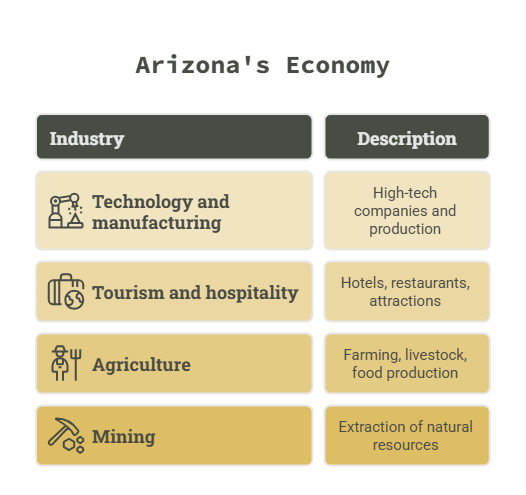
Big employers include Intel, Honeywell, and Banner Health. The cost of living is close to the national average, though Phoenix has grown more expensive in recent years.
Education
Arizona has a large public school system serving K–12 students. For higher education, the state is home to top schools like:
- Arizona State University (ASU)
- University of Arizona
- Northern Arizona University
The state’s literacy rate is similar to the national average, and many students go on to attend in-state colleges.
Culture and Lifestyle
Arizona’s culture blends Native American, Mexican, and Western traditions. Popular foods include Sonoran hot dogs and fry bread.
The state hosts events like the Tucson Gem Show and Barrett-Jackson Car Auction. Sports fans cheer for the Arizona Cardinals (NFL) and Phoenix Suns (NBA).
State Symbols
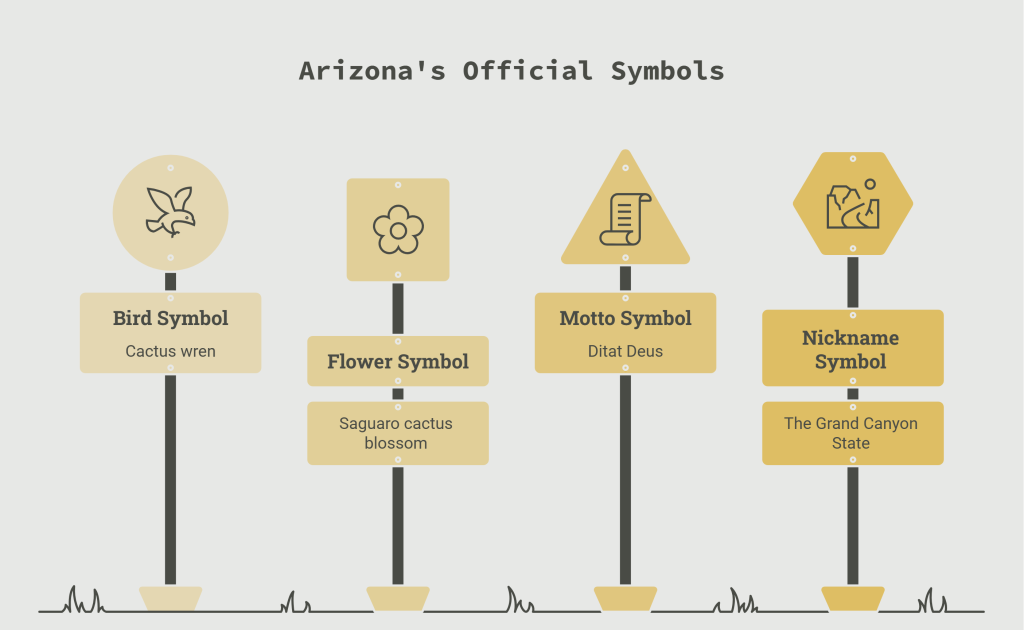
- Bird: Cactus wren
- Flower: Saguaro cactus blossom
- Motto: “Ditat Deus” (God Enriches)
- Nickname: The Grand Canyon State
Visiting Arizona
Planning a trip? The best time to visit is fall through spring, when temperatures are cooler. Renting a car is the easiest way to get around, since cities are spread out.
Whether you’re drawn by the canyons, the culture, or the sunshine, Arizona offers a little bit of everything for every traveler.